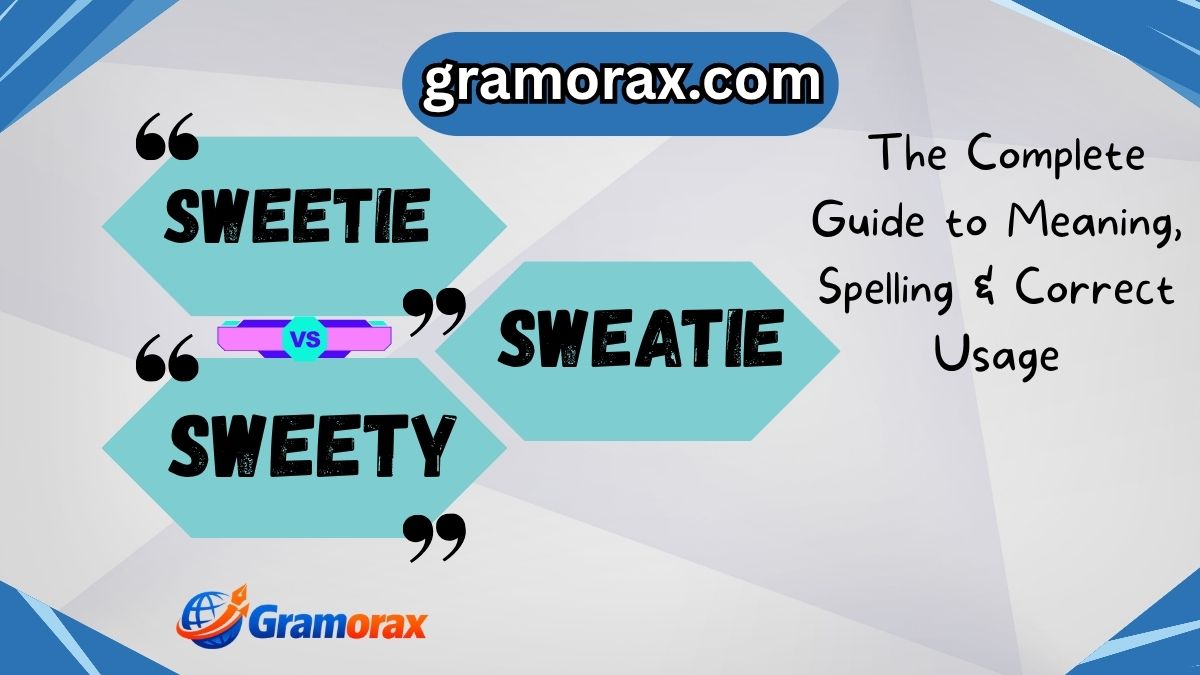
Sweetie is the correct, dictionary-approved spelling of this common English term of endearment. Sweety is an informal variant that surfaces in casual texting, while sweatie is simply a misspelling with no recognized meaning — often confused with sweaty. Sweetie vs Sweety vs Sweatie.
Spelling one small word wrong can change how your entire message feels to the person reading it.
Knowing the difference between these three versions helps you write with confidence, warmth, and clarity — whether you’re texting someone you love or crafting a heartfelt note that truly lands.
Sweetie vs Sweety vs Sweatie: Why These Spellings Confuse People
If you’ve ever typed a quick message to someone special and paused — Is it sweetie or sweety? What on earth is sweatie? — You’re far from alone. These three spellings float around texts, social media captions, and everyday conversations in ways that leave even fluent English speakers second-guessing themselves.
The confusion is understandable. All three versions sound nearly identical when spoken aloud, which means the difference only becomes visible in writing. That’s exactly where the trouble starts.
This guide cuts through the noise. You’ll walk away knowing which spelling is correct, what each variant actually means, where these words come from, and how to use them appropriately in real conversations.
Why English Spelling Creates Mix-Ups Like Sweetie vs Sweety
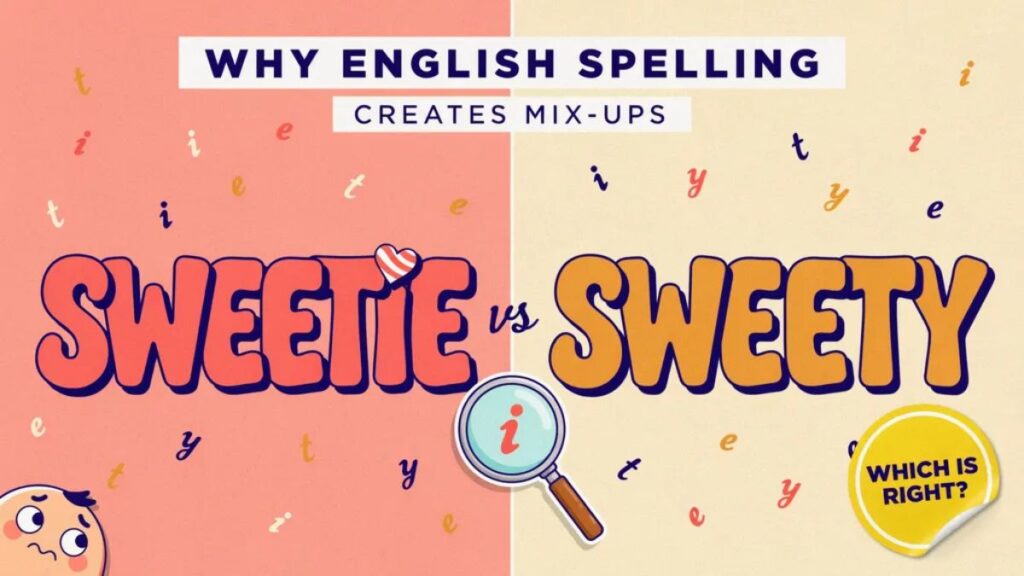
English has never been a language that plays by clean, consistent rules. It pulls vocabulary from Old English, Latin, French, Norse, and dozens of other sources — and the spelling system reflects that messy history. Words that sound the same often look completely different on paper, and words that look similar can mean wildly different things.
When a base word like sweet gets extended into casual speech, multiple spelling attempts tend to surface. Add the fact that texting culture rewards speed over precision, and suddenly sweety and sweatie start appearing everywhere alongside the correct sweetie.
Here’s a snapshot of how the three versions compare:
| Spelling | Status | Meaning | Use It? |
|---|---|---|---|
| Sweetie | ✅ Correct | Term of endearment | Yes — always safe |
| Sweety | ⚠️ Informal variant | Same as sweetie | Only in casual texting |
| Sweatie | ❌ Misspelling/error | Resembles “sweaty” | Avoid entirely |
Sweetie vs Sweety: The Real Difference
Sweetie — The Correct, Standard, Universally Accepted Spelling
Sweetie is the form you’ll find in dictionaries, published literature, and any piece of writing that follows standard English conventions. It functions as a term of endearment — a warm, affectionate label used for romantic partners, children, close friends, and family members.
The spelling follows a natural pattern: the adjective sweet plus the diminutive suffix -ie, which English uses to create softer, more affectionate forms of words. Think of auntie, birdie, or doggie — the -ie ending consistently signals something smaller, gentler, or more personal.
Some everyday examples:
- “Good morning, sweetie — your breakfast is ready.”
- “Thanks for checking on me, sweetie. That really means a lot.”
- “She called her daughter sweetie every single morning before school.”
Sweetie is versatile. It works in messages, spoken conversation, greeting cards, and even light professional settings where warmth is appropriate — like a teacher talking to a young student.
Sweety — The Common Misspelling That Appears Everywhere
Sweety takes a different route. Instead of the -ie ending, it substitutes a plain -y — the same suffix used for adjectives like cloudy, salty, or dusty. That’s the core issue: sweety looks like it should be an adjective describing something that has the quality of sweetness, not a term of endearment.
Despite that, sweety pops up constantly in informal writing. You’ll see it in tweets, WhatsApp messages, Instagram comments, and casual texts. In those low-stakes environments, the meaning still comes through clearly — context handles the heavy lifting.
Is Sweety completely wrong? Technically, yes. Standard dictionaries list sweetie as the accepted form. But in informal texting between friends, sweety rarely confuses. The safest habit is to default to sweetie in any writing that other people might read more carefully.
Sweatie: The Odd One Out — What It Really Means
What Sweatie Actually Means
Here’s where things get genuinely awkward. Sweatie is not a recognized English word in any major dictionary. It holds no standard definition, carries no official usage, and doesn’t belong to any established category of terms.
If you were to break it down literally, sweatie would suggest something related to sweaty — as in perspiration. That’s not exactly the warm, fuzzy impression most people are going for when they address someone they care about.
Sweatie vs Sweaty — A Common Typing Mishap
The confusion between sweatie and sweaty is one of the easiest spelling tangles in casual writing. Someone rushing through a text might type sweatie when they meant sweaty — or, more commonly, they might intend sweetie but hit the wrong keys entirely.
The visual similarity is the trap:
- Sweaty = covered in perspiration; an adjective describing a physical state
- Sweatie = not a real word; often a typo for either sweaty or sweetie
- Sweetie = a genuine, affectionate term of endearment
If autocorrect ever hands you back sweatie, reject it immediately.
Is Sweatie Ever Used as a Pet Name?
Rarely, and only in very deliberate playful contexts where both people understand it as a joke or ironic nickname. It is not used as a sincere term of endearment in any mainstream English-speaking culture. If someone uses it affectionately, it almost certainly comes with a winking, self-aware tone — and even then, it can easily be misread. The honest advice: leave sweatie out of your vocabulary entirely.
Pet Names in American English and Where “Sweetie” Fits
Why People Use Pet Names
Pet names — terms of endearment used between people who share a close bond — serve a real psychological function. They create intimacy, signal trust, and mark a relationship as something distinct from ordinary social interaction. When you call someone sweetie, you’re not just addressing them; you’re communicating the nature of your connection.
Research in linguistics and social psychology consistently shows that couples and close family members who use pet names report higher levels of relationship satisfaction. These terms act as emotional shorthand.
Common Pet Names in American English
American English has a rich tradition of affectionate nicknames. Some of the most widely used include:
- Honey — warm, domestic, widely used across generations
- Babe / Baby — popular in romantic relationships
- Darling — slightly more formal or old-fashioned, but still common
- Sweetie — gentle, works across ages and relationship types
- Sugar — Southern U.S. flavor, casual and affectionate
- Dear / Dearie — traditional, often used by older speakers
Why “Sweety” and “Sweatie” Don’t Fit the Pattern
Standard pet names in English are spelled consistently with accepted dictionary forms. When you swap the -ie for a -y (sweety) or introduce a rogue vowel (sweatie), the word loses its visual clarity and credibility. In formal writing — a heartfelt letter, a greeting card, anything printed — these variants look like mistakes rather than endearments.
Where These Words Come From: The History Behind Sweet, Sweetie & Sweety
The Origin of “Sweet”
The word sweet has its roots in the Old English swete, meaning pleasant, agreeable, or delightful, and can be traced further back to the Proto-Germanic root swōtaz, which also conveys the idea of sweetness or pleasantness. As the English language evolved through the Middle Ages, sweet expanded beyond taste to describe personalities, voices, smells, and emotional experiences.
How “Sweetie” Developed
Sweetie, as a term meaning “lover” or “sweetheart,” dates to around 1778, formed from sweet with the diminutive suffix -ie. The word evolved through Middle English swete, adding the diminutive suffix- i, to create sweetie, maintaining its meaning related to affection and tenderness. By the 19th century, it had become a firmly embedded part of everyday English affection.
How “Sweety” Emerged
Sweety arose as an informal, phonetic spelling from writers who defaulted to the simpler -y suffix rather than -ie. It has no separate etymological origin — it’s simply an alternative rendering of the same word, shaped by casual writing habits rather than any grammatical rule. Sweety represents a linguistic deviation that speaks to the creative nature of language users, but it was never adopted into standard dictionaries as the preferred form.
Context Matters: When to Use These Terms (and When to Avoid Them)
When to Use “Sweetie”
- Addressing a child warmly: “Come here, sweetie.”
- Talking to a romantic partner in casual conversation
- Writing in a greeting card or personal note
- Responding to a friend who needs emotional support
When You Shouldn’t Use Pet Names
- In professional emails or workplace communication
- When addressing someone you’ve just met
- In any context where the other person hasn’t signaled they’re comfortable with it
- In formal writing: academic papers, business reports, official documents
Recognizing the Fine Line
Using words like sweetie, sweety, or sweatie might seem trivial, but small spelling and usage choices can affect how your message is received. In some regions, terms of endearment are strictly personal, not casual. What reads as warm and affectionate to one person can feel patronizing or too familiar to another — especially across cultural boundaries.
Choosing the Right Word: Practical Tips You Can Use Today
Spell it Correctly Every Time
Default to sweetie in every situation. It’s the form that dictionaries recognize, editors accept, and readers expect. When in doubt, this is your safe choice.
Avoid “Sweety” Unless It’s Playful
If you’re texting a close friend and sweety slips out, no real harm is done. But if you’re writing anything — a message to a teacher, a note to a colleague, a formal greeting card — go back and swap it for sweetie.
Treat “Sweatie” as a Mistake to Avoid
There is no context in which sweatie serves you better than sweetie. If you type it, correct it. If autocorrect suggests it, override it.
Etiquette Tips for Using Pet Names
- Read the relationship — use pet names only where warmth is mutual and expected
- Respect boundaries — some people dislike being called pet names by anyone except close family
- Match the register — casual texts allow more flexibility than written messages
Personal vs Professional Examples
| Context | Appropriate | Inappropriate |
|---|---|---|
| Text to partner | “Miss you, sweetie 💕” | N/A |
| Email to coworker | “Hi Sarah, I wanted to follow up…” | “Hi sweetie, just checking in…” |
| Note to child | “Sweet dreams, sweetie!” | N/A |
| Message to new acquaintance | Use their name | Any pet name |
FAQs
What is the correct spelling: sweetie or sweety?
Sweetie is the correct, standard spelling recognized by all major English dictionaries. Sweety is an informal variant that appears in casual writing but is not considered grammatically correct.
What does sweatie mean?
Sweatie has no recognized meaning in standard English. It is most commonly a misspelling of either sweetie (a term of endearment) or sweaty (meaning covered in perspiration).
Is sweety grammatically correct?
No, sweety is not the standard spelling. It is widely used informally in texts and social media, but sweetie remains the accepted form in formal and standard English writing.
When should I use “sweetie” in communication?
Use sweetie in personal, informal contexts — with romantic partners, children, close friends, or family members. Avoid it in professional settings or with people you don’t know well.
Is sweatie ever used affectionately?
Very rarely, and only in deliberately playful or ironic contexts between people who know each other well. It is not a recognized term of endearment and is best avoided to prevent confusion with sweaty.
Final Thoughts
The difference between sweetie, sweety, and sweatie comes down to one simple fact: only one of these is a real, dictionary-approved word, and that’s sweetie. Sweetie vs Sweety vs Sweatie. The others are either informal shortcuts (sweety) or outright errors (sweatie) that can cloud your message and chip away at your credibility as a writer. Sweetie vs Sweety vs Sweatie.
When affection matters enough to put it into words, it’s worth spelling those words right. Stick with sweetie — it’s warm, it’s clear, and it says exactly what you mean without any awkward second-guessing. Sweetie vs Sweety vs Sweatie.