Gauging interest is a phrase used every day in marketing, business, and everyday conversation, yet many writers pause when they type it. Is the “u” really necessary, or is “gaging” an acceptable shortcut? Gauging Interest vs Gaging Interest.
This confusion shows up constantly in emails, surveys, and product launches. Getting it wrong doesn’t just look like a typo — it can quietly undercut how professional your writing feels to a reader.
This guide breaks down the origin of “gauge,” clears up the confusion with “gage,” and shows you exactly how to measure audience interest the right way — with the right spelling every time.
Understanding the Confusion Between “Gauging” and “Gaging”
The mix-up between these two words comes down to a single missing letter — and a lot of misplaced confidence. “Gauge” and “gage” sound almost identical when spoken aloud, and spell-checkers don’t always catch the difference because “gage” is technically a real word.
The problem is that “gage” doesn’t carry the same meaning in everyday use. It survives mostly in legal, historical, and technical contexts — not in phrases about measuring curiosity or demand. That gap between sound and meaning is exactly why so many writers second-guess themselves.
What “Gauge” Really Means
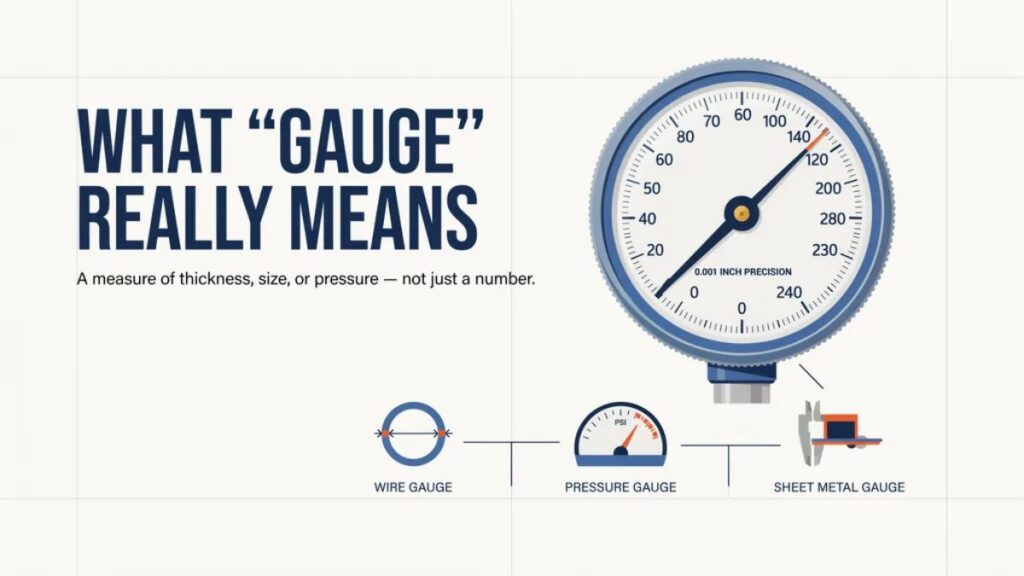
At its core, “gauge” means to measure, estimate, or assess something — often something that isn’t easily quantified, like enthusiasm, reaction, or demand.
✔ Simple Example
- “The mechanic used a pressure gauge to check the tires.”
✔ Abstract Uses of “Gauge”
- “It’s hard to gauge how the audience will react.”
- “We’re gauging customer sentiment before the launch.”
In both cases, “gauge” points to evaluation — measuring something intangible against a standard or expectation.
Where “Gauge” Comes From: A Quick Origin Story
The word traces back to Old French terms referring to a measuring standard or calibration tool, used by early merchants and craftsmen to check quantities and dimensions. As English absorbed the term, “gauge” became the standard spelling for measurement-related language, while “gage” drifted into narrower, specialized use. Over centuries, “gauge” won out in mainstream writing simply because it was used more consistently across trade, science, and everyday speech.
Why “Gauging Interest” Is the Correct and Widely Accepted Term
“Gauging interest” is the version recognized by dictionaries, style guides, editors, and search engines alike. A few reasons it dominates:
- Interest behaves like a variable — it rises and falls, which fits the measurement logic built into “gauge.”
- Newspapers, academic writing, and corporate communication consistently use “gauge,” reinforcing reader expectations.
- Search data shows “gauging interest” appears far more often than “gaging interest” across published content.
Simply put, if your goal is clarity and credibility, “gauging interest” is the safer, smarter choice.
Understanding “Gage” and Why It Causes Confusion
“Gage” is a legitimate English word, but its meanings sit far from “measuring interest.” Historically, it referred to a pledge or token of security — as in throwing down a gage before a duel. In some technical and machining fields, “gage” is still used as a variant spelling for measuring tools.
Reasons for the Mix-Up
- The words are near-homophones, so they’re easy to confuse when writing quickly.
- Some dictionaries list “gage” as a valid alternate spelling of “gauge,” which fuels the idea that either works everywhere.
- Autocorrect doesn’t flag “gage” as an error, since it’s a real word.
Modern Use of “Gage”
Today, “gage” mostly survives in machining, tool calibration, legal terminology, and older literary texts — not in everyday business or marketing writing.
Gauge vs. Gage: Side-By-Side Comparison
| Feature | Gauge | Gage |
|---|---|---|
| Common meaning | Measure, assess, estimate | Pledge, token, or technical tool variant |
| Modern usage | Mainstream, everyday writing | Rare, niche, technical fields |
| Best for | Business, marketing, education, general writing | Machining, legal/historical contexts |
| SEO performance | Strongly preferred | Rarely searched or ranked |
| Reader perception | Professional, expected | Outdated or confusing |
Examples to Clearly Distinguish the Two
✔ Correct: Using “Gauge”
- “We are gauging interest among early adopters.”
- “The survey gauges consumer interest effectively.”
❌ Incorrect: Using “Gage”
- “We are gaging interest among early adopters.” (non-standard in this context)
- “The survey gages consumer interest.” (reads as a spelling error to most audiences)
✔ Correct Uses of “Gage” (Unrelated Meanings)
- “He threw down the gage before the duel.”
- “The machinist checked the part with a gage block.”
How Professionals View the Use of “Gage” Today
Editors, copywriters, and technical writers generally treat “gage” as an exception rather than a rule. Outside of machining or historical writing, it’s viewed as a spelling slip that can quietly chip away at a document’s credibility.
A Few Professional Insights
- Editors note that spelling precision signals attention to detail, especially in business writing.
- Style guides across journalism and publishing default to “gauge” for any measurement-related context.
- Technical writers reserve “gage” strictly for tool specifications, not audience or interest language.
How to Gauge Interest Effectively
Knowing the right word is only half the job — the real value comes from knowing how to measure interest accurately before committing time, money, or resources to an idea.
Methods to Gauge Interest
📝 1. Surveys and Polls
Quick, structured surveys let you collect direct feedback on demand, pricing, or features before launch.
📊 2. A/B Testing
Comparing two versions of a page, email, or offer reveals which one resonates more with your audience.
👥 3. Focus Groups
Small group discussions surface detailed, qualitative feedback that numbers alone can’t capture.
💬 4. Direct Conversations
One-on-one conversations with customers or prospects often reveal honest, unfiltered reactions.
📈 5. Engagement Metrics
Click-through rates, time on page, and social shares all offer indirect but measurable signals of interest.
🧪 6. Pre-Orders or Deposits
Asking people to commit money, even a small deposit, is one of the strongest indicators of real demand.
📅 7. Pilot Programs
Running a limited version of a product or service tests real-world interest before a full-scale rollout.
Case Study 1: Gauging Interest for a New Online Course
What You Did:
A course creator built a simple landing page describing the course outline and pricing, then drove traffic through email and social posts before recording a single lesson.
Results:
Over two weeks, the page collected sign-ups from interested students, along with survey answers about preferred topics and price sensitivity.
What This Means:
The creator validated demand and refined the curriculum based on real interest — without wasting months producing content nobody wanted.
Case Study 2: Testing Interest for a Product Launch
What They Tried:
A startup ran a waitlist campaign paired with a short pre-order window before manufacturing its first product batch.
Results:
The waitlist converted into hundreds of pre-orders, giving the team a clear, low-risk revenue signal.
Meaning:
Financial commitment from customers proved to be a far stronger interest signal than likes or comments alone.
Lesson:
Gauging interest through pre-orders reduces the risk of overproducing or underestimating demand.
Synonyms for “Gauging Interest”
- Assessing interest
- Measuring demand
- Testing the waters
- Evaluating enthusiasm
- Sounding out opinion
- Taking the pulse of an audience
Common Mistakes and How to Avoid Them
Mistake 1: Writing “gaging interest”
This is the single most common error — always check for the missing “u” before publishing.
Mistake 2: Thinking “gage” is a modern alternative spelling
“Gage” isn’t a modern shortcut; it’s an older, narrower spelling reserved for specific technical contexts.
Mistake 3: Using “gage” in business writing
In professional or marketing content, “gage” reads as a mistake rather than a stylistic choice.
Mistake 4: Assuming context doesn’t matter
Machining and legal writing are the only spaces where “gage” fits naturally — everywhere else, it stands out.
Quick Memory Trick
Remember: the “u” in gauge keeps the word looking (and sounding) right — no “u,” no use, outside of specialist writing.
FAQs
What is the correct term: “gauging interest” or “gaging interest”?
“Gauging interest” is correct and the standard spelling used across business, marketing, and everyday writing.
Is “gaging interest” ever correct?
It’s technically a recognized spelling variant, but it’s rare and generally avoided outside specialist technical fields.
What does “gauging interest” mean?
It means measuring or assessing how curious, enthusiastic, or willing someone is before making a decision.
What is the origin of the word “gauge”?
“Gauge” comes from Old French terms for a measurement standard, later adopted broadly across English for evaluation and measurement.
How can I gauge interest effectively?
Use surveys, A/B tests, focus groups, engagement metrics, and pre-orders to collect real, measurable signals of demand.
Conclusion
When it comes to gauging interest, the spelling matters just as much as the strategy behind it. “Gauging interest” is the correct, professional, and widely recognized term, while “gaging” belongs to a narrow set of technical and historical contexts. Gauging Interest vs Gaging Interest.
Choosing the right spelling protects your credibility, while choosing the right method — surveys, A/B tests, or pre-orders — protects your time and resources. Gauging Interest vs Gaging Interest. Master both, and gauging interest becomes a skill that consistently pays off before you commit to any new idea. Gauging Interest vs Gaging Interest.