
“Did you had” is incorrect — “did you have” is always the right choice. This simple past grammar rule trips up millions of English learners worldwide. When “did” acts as the auxiliary verb in a question, the main verb must always stay in its base form. Did You Had or Did You Have.
One small grammar mistake can make an entire sentence sound unnatural — even to untrained ears. Mastering this rule instantly upgrades your spoken and written English, building real confidence in everyday conversations, job interviews, and formal writing alike.
Understanding why “did you have” is correct — not just that it is — transforms a memorized rule into a permanent grammar skill. This guide covers the rule, common errors, real examples, and clear comparisons to help you get it right every time.
Understanding the Basics of Auxiliary Verbs and Past Tense
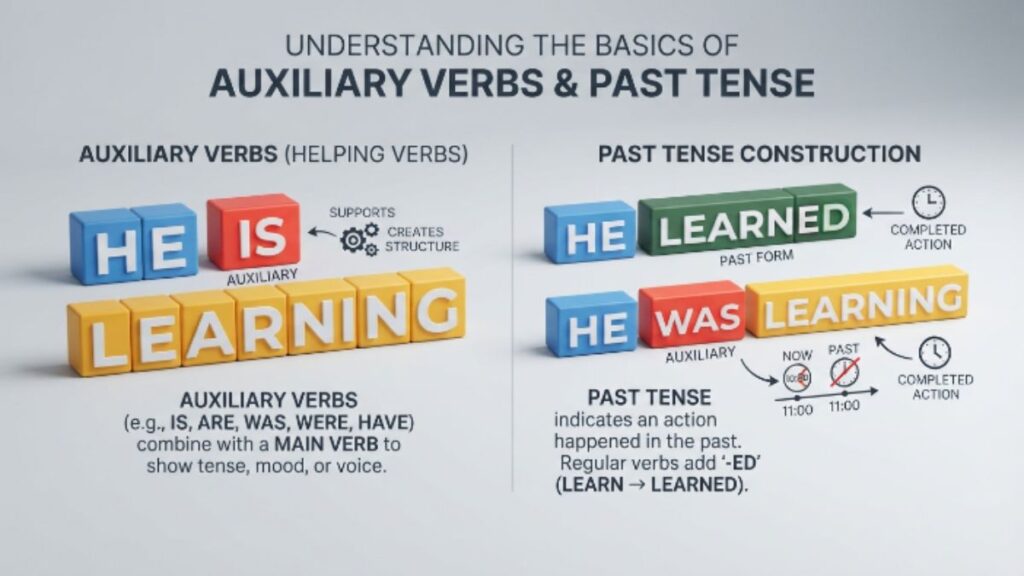
Before jumping into the main rule, it helps to understand two building blocks: auxiliary verbs and the simple past tense.
Auxiliary verbs — also called helping verbs — work alongside main verbs to build questions, negatives, and different tenses. Common examples include do, does, did, have, has, had, will, and be. They carry grammatical information so the main verb does not have to.
The simple past tense describes actions that started and finished at a specific point in the past. Most regular verbs form the simple past by adding -ed (walked, called, finished). Irregular verbs follow their own patterns — and have becomes had in this group.
What Happens After “Did”?
Here is the most important rule in this entire article:
When “did” appears in a sentence, the main verb that follows MUST stay in its base (infinitive) form.
“Did” is already the past tense of “do.” It carries all the past tense information the sentence needs. The main verb’s only job at that point is to name the action — nothing more.
- ✅ Did you have time?
- ✅ Did she call yesterday?
- ✅ Did they finish the project?
How Simple Past Questions Work
The structure for a simple past question is fixed and consistent:
Did + Subject + Base Verb + (Object/Rest of Sentence)?
| Position | Word |
|---|---|
| Auxiliary | Did |
| Subject | you / he / she / they |
| Base Verb | have / go / eat / see |
| Rest | the meeting? / lunch? / that film? |
This pattern never changes. “Did” does the heavy lifting, and the base verb simply follows along.
The Role of “Did” in Forming Questions
“Did” is the past tense of the auxiliary verb “do.” In English, when you invert the subject and auxiliary to form a question, “did” moves to the front and signals that the entire sentence belongs in the past tense.
Think of “did” as a tense switch. Once it is flipped on, every verb that follows automatically operates in past-tense territory — without needing to change its own form. This is what makes English question formation consistent and learnable.
- Statement: You had lunch.
- Question: Did you have lunch? (not “Did you had lunch?”)
The verb have resets to its base form the moment “did” enters the picture. This reset happens without exception.
Why “Had” Doesn’t Follow “Did”
Using “had” after “did” creates what grammarians call a double past tense — and English grammar does not allow it. Both “did” and “had” express past time. Stacking them together is like wearing two seat belts; the second one adds nothing useful and actually creates confusion.
- “Did” = past tense marker ✅
- “Had” = past tense form of have ✅
- “Did” + “Had” = double past = ❌ grammatically incorrect
Compare These Two Cases
| Sentence | Verdict | Reason |
|---|---|---|
| Did you have a car back then? | ✅ Correct | “Did” = past; “have” = base form |
| Did you had a car back then? | ❌ Incorrect | Double past tense — “did” + “had” |
| Did she have any questions? | ✅ Correct | Base form follows “did” |
| Did she had any questions? | ❌ Incorrect | “Had” cannot follow “did” |
| Did they have enough time? | ✅ Correct | Proper auxiliary + base verb |
| Did they had enough time? | ❌ Incorrect | Two past forms used together |
The pattern is consistent. Once you see it, you cannot unsee it.
“Did You Have” Versus “Have You Had”: Decoding the Difference
These two phrases are close cousins, but they belong to different tenses and carry different meanings. Confusing them is one of the most frequent errors among learners who have already mastered the did + have rule.
Did You Have
“Did you have” belongs to the simple past tense. It asks about a specific, completed event at a defined moment in the past. A time reference — yesterday, last week, this morning, in 2019 — is either stated or clearly implied.
- Did you have breakfast this morning?
- Did you have any trouble finding the office yesterday?
- Did you have a pet when you were a child?
The event is over. The time window is closed.
Have You Had
“Have you had” belongs to the present perfect tense. It asks about experience, completion, or relevance to the present moment — without pinning the action to a specific time.
- Have you had sushi before? (ever in your life?)
- Have you had a chance to review the report? (up to now)
- Have you had any side effects? (recently, or ever)
Time is open-ended here. The experience may have happened at any point up to the present.
Key Differences Table
| Feature | Did You Have | Have You Had |
|---|---|---|
| Tense | Simple past | Present perfect |
| Time reference | Specific past moment | Unspecified / up to now |
| Time markers | Yesterday, last week, in 2020 | Ever, before, yet, already |
| Focus | Completed event | Experience or current relevance |
| Example | Did you have lunch at noon? | Have you had lunch yet? |
Quick rule: If you can insert yesterday or last night naturally, use did you have. If you would use ever or yet, use have you had.
Correct Use of “Did You Have” in Everyday Situations
“Did you have” appears constantly in natural English conversation. Here are the three main ways native speakers use it.
Asking About Past Events
This is the most common use — checking whether something happened at a particular time.
- Did you have a good time at the wedding?
- Did you have any meetings this afternoon?
- Did you have trouble with the exam last week?
Inquiring About Past Possessions
You can use this structure to ask what someone owned or held at a previous point in time.
- Did you have a bicycle when you were growing up?
- Did you have an umbrella with you when it rained?
- Did the company have a bigger office before?
Talking About Past Feelings or Health
Doctors, friends, and family members use this structure to ask about temporary past states.
- Did you have a fever last night?
- Did you have any pain after the surgery?
- Did you have anxiety before your presentation?
Strengthen Your Grammar: Practice Examples and Tips
Practice Sentences
Try reading these aloud and notice how natural “have” sounds after “did”:
- Did you have enough sleep last night?
- Did your sister have a good birthday?
- Did the team have a meeting yesterday?
- Did you have any cash on you at the time?
- Did he have a reason for being late?
Now try the negatives:
- I didn’t have time to call you back.
- She didn’t have her ID with her.
- They didn’t have enough supplies.
Quick Tips to Remember
- “Did” already owns the past. The main verb just needs to name the action.
- Base form = the dictionary form. Have, not had. Go, not went. Eat, not ate.
- Negative = did not + base verb. I didn’t have, not I didn’t had.
- One past marker per sentence. Never stack two past forms together.
Common Mistakes with “Did You Have”
Mixing Verb Forms
Learners sometimes say “Did you had” because they see “did” and instinctively reach for another past-tense word. The brain pattern-matches with “past situation = past word” — but this logic does not apply when an auxiliary verb is already present.
❌ Did you had dinner already? ✅ Did you have dinner already?
Forgetting Auxiliary Verb
Some learners drop “did” entirely and raise the pitch of their voice to form a question — a pattern that may work in their native language but sounds unnatural in English.
❌ You had a meeting today? (missing auxiliary) ✅ Did you have a meeting today?
Overthinking Past Tenses
English has several past tenses, and learners sometimes try to apply present perfect rules to simple past questions — or vice versa. Keep it simple: for questions about a specific past time, “did + base verb” is always the correct pattern.
Real-Life Case Study: English Learners’ Common Errors
Consider two learners working through the same grammar point.
Ahmed, an Arabic-speaking student, kept writing “Did you had breakfast?” in his English class. His teacher pointed out the double past tense error. Within a week of practicing the rule — did + base verb — he stopped making the mistake entirely. He later said the turning point was thinking of “did” as a tense switch that reset everything after it.
Maria, a Spanish speaker preparing for a job interview, rehearsed the sentence “Did you had previous experience in this field?” before her meeting. Her interviewer corrected her gently. Maria later revised her practice sentences to always use “Did you have” and reported feeling significantly more confident in subsequent interviews.
Both learners share the same story: one rule, applied consistently, produces fast results.
When to Use “Did You Have” in Conversations
Use “did you have” whenever you want to ask about something that:
- Happened at a specific time in the past (yesterday, last year, this morning)
- Is fully completed and no longer ongoing
- Involves a possession, experience, or feeling at a past moment
- Needs a yes/no answer about a past event
Avoid “did you have” when asking about lifetime experiences with no time reference — that is where “have you had” takes over.
FAQs
Why is “Did you had” incorrect?
“Did” is already past tense, so adding “had” creates a double past — a structure English grammar does not allow. The main verb must always stay in its base form after “did.”
When should I use “Did you have”?
Use “did you have” when asking about a specific, completed action or state in the past — especially when a time reference like yesterday or last week is present or implied.
What is the difference between “Did you have” and “Have you had”?
“Did you have” is simple past and refers to a specific past time. “Have you had” is present perfect and refers to general experience or relevance up to the present moment.
How do I make negative sentences?
Use did not (didn’t) + base verb: I didn’t have time. Never say I didn’t had time.
Can I use “Did you have” in formal writing?
Yes — “did you have” is grammatically correct and appropriate in both formal and informal English, whether spoken or written.
Conclusion
Did you had or did you have — the answer is always did you have. “Did” already marks the past tense. So the main verb stays in its base form. This rule never changes. Apply it every time you form a past tense question. Did You Had or Did You Have. Your English will instantly sound more natural and correct.
Mastering did you had or did you have is one small step with a big impact. It builds grammar confidence fast. Speak clearly. Write correctly. Practice daily with simple sentences. Soon, this rule will feel completely automatic — no second-guessing, no hesitation, just smooth and accurate English every time.