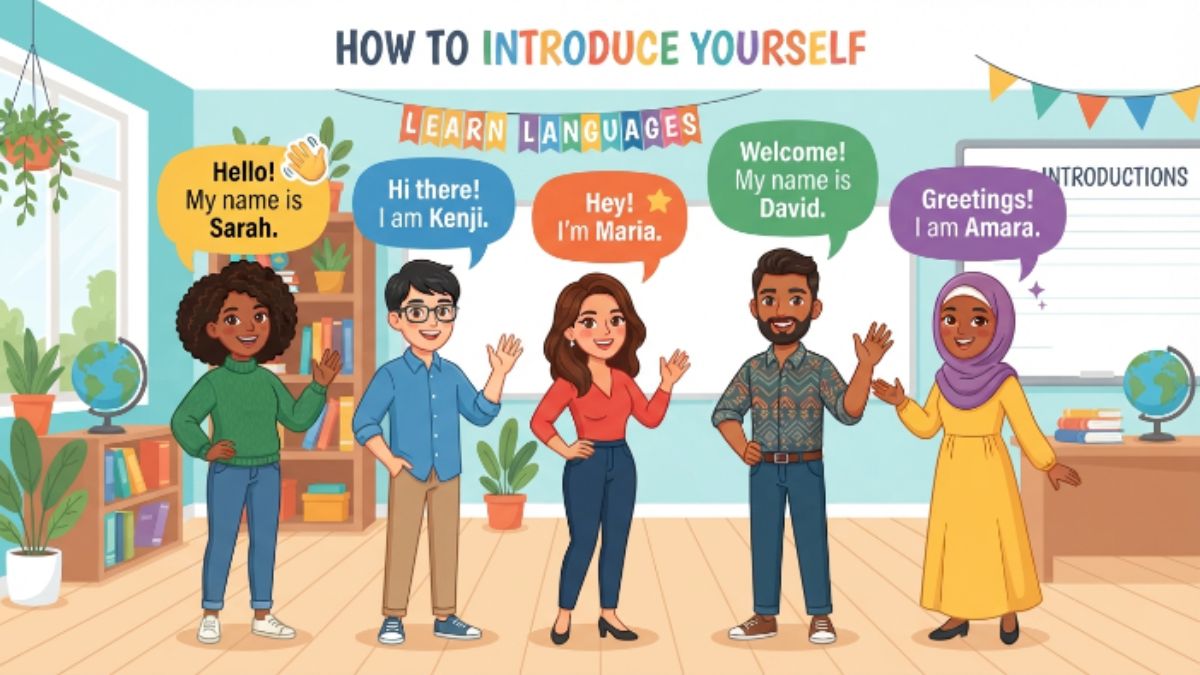
Introducing yourself is the first small moment that shapes a bigger impression. Saying “my name is” gets the job done, but it can also feel flat after the hundredth time you use it. Whether you’re walking into a meeting, joining a call, or meeting someone at a party, having a handful of natural alternatives ready makes your introduction sound warmer, more confident, and more like you. Below, you’ll find a simple breakdown of what “my name is” actually means, when to use it, and more than 13 fresh ways to say it — each with an example so you can see it in action.
What Does “My Name Is” Mean?
Simple definition
“My name is” is a straightforward way to tell someone what you’re called. It’s the phrase most people learn first when practicing introductions, and it works because it leaves zero room for confusion.
Grammar explanation
Grammatically, the sentence follows a basic subject-verb-complement pattern: “my name” (subject) + “is” (linking verb) + your name (complement). Because it uses the verb “to be,” it directly states a fact about your identity rather than describing an action. That’s part of why it sounds so plain and declarative compared to phrases like “I go by” or “people call me,” which describe how others refer to you instead of stating a fixed fact.
When to Use “My Name Is”
Common situations
“My name is” fits almost anywhere, which is exactly why it’s so widely used. You’ll typically reach for it when:
- Meeting someone for the first time, in person or online
- Introducing yourself at the start of a phone call
- Writing a formal email or cover letter
- Speaking in an interview or official setting
- Filling out a form or answering a question about your identity
Example
“Hi, my name is Daniel. I’ll be leading today’s training session.”
This sentence works in almost any setting because it’s neutral, clear, and doesn’t rely on slang or regional phrasing.
Is It Professional or Polite to Say “My Name Is”?
Yes — “my name is” is both professional and polite. It’s grammatically correct, universally understood, and appropriate for interviews, business meetings, and formal writing. That said, it can sound a little rehearsed or textbook-like in casual conversation, especially with people your own age or in relaxed social settings. In those moments, a more natural phrase like “I’m [Name]” often lands better, while “my name is” remains the safer choice for formal or written introductions.
Pros and Cons of Using “My Name Is”
Pros
- Instantly recognized in any English-speaking context
- Grammatically simple and easy for non-native speakers
- Appropriate for formal writing, interviews, and official introductions
- Leaves no ambiguity about what you’re communicating
Cons
- Can sound stiff or overly formal in casual settings
- Repetitive if used the same way every time you meet someone
- Doesn’t convey personality, warmth, or tone on its own
- Less common in natural spoken English compared to shorter alternatives
13+ Other Ways to Say “My Name Is”
Here’s a quick comparison before we go phrase by phrase:
| Phrase | Best For | Tone |
|---|---|---|
| I’m [Name] | Everyday conversation | Friendly, natural |
| I am called [Name] | Semi-formal introductions | Neutral |
| This is [Name] | Phone calls, texts | Clear, direct |
| You can call me [Name] | Offering a nickname | Warm, welcoming |
| I go by [Name] | Casual or preferred names | Relaxed |
| Allow me to introduce myself | Formal speeches, events | Polished |
| Let me introduce myself | Meetings, presentations | Polite |
| People call me [Name] | Sharing a nickname | Friendly |
| My name’s [Name] | Casual speech | Informal |
| It’s [Name] | Quick, informal replies | Brief, easy |
| I would like to introduce myself as [Name] | Formal writing | Respectful |
| This is [Name] speaking | Phone or voicemail | Professional |
| I’d like you to meet me, I’m [Name] | Playful introductions | Friendly, unique |
Phrase: I’m [Name]
This is the most common everyday alternative. It’s short, natural, and works in nearly any casual or semi-formal setting.
Example: “Hi, I’m Sarah. Nice to meet you.”
Phrase: I am called [Name]
A slightly more formal option, often used when clarifying how you’re addressed rather than just stating a fact.
Example: “I am called Michael, though most people shorten it to Mike.”
Phrase: This is [Name]
Ideal for phone calls, voicemails, or messages where the listener can’t see you and needs a quick identifier.
Example: “Hi, this is Rachel calling about the invoice.”
Phrase: You can call me [Name]
This phrase invites the listener to use a nickname or shortened version of your name, which adds warmth to the introduction.
Example: “My full name is Alexander, but you can call me Alex.”
Phrase: I go by [Name]
Useful when your preferred name differs from your legal or formal name.
Example: “My birth name is Jonathan, but I go by JJ.”
Phrase: Allow me to introduce myself
A polished, formal phrase perfect for speeches, presentations, or first meetings with important clients.
Example: “Allow me to introduce myself — I’m Dr. Patel, head of the research team.”
Phrase: Let me introduce myself
Slightly less formal than the version above, but still polite and appropriate for meetings or group settings.
Example: “Let me introduce myself. I’m Priya, the new marketing coordinator.”
Phrase: People call me [Name]
A friendly way to share a nickname or the name others commonly use for you.
Example: “People call me Coach Reed around here.”
Phrase: My name’s [Name]
A casual contraction that feels natural in everyday spoken English.
Example: “My name’s Tom — I just moved in next door.”
Phrase: It’s [Name]
Brief and informal, often used on calls, texts, or when someone might already expect to hear from you.
Example: “Hey, it’s Chloe from the design team.”
Phrase: I would like to introduce myself as [Name]
A formal, respectful phrasing best suited for written communication like emails or letters.
Example: “I would like to introduce myself as Karen Lopez, the new project lead.”
Phrase: This is [Name] speaking
Common in phone calls, customer service, and voicemail greetings, where clarity matters most.
Example: “Good afternoon, this is David speaking from customer support.”
Phrase: I’d like you to meet me, I’m [Name]
A playful, slightly unconventional twist on a standard introduction, great for lighthearted or creative settings.
Example: “I’d like you to meet me — I’m Ben, the guy who always brings snacks to meetings.”
Comparison Table of Top Alternatives
| Phrase | Formality Level | Common Setting |
|---|---|---|
| I’m [Name] | Low | Everyday, social |
| Allow me to introduce myself | High | Formal events, speeches |
| This is [Name] speaking | Medium | Phone calls |
| You can call me [Name] | Low | Casual, friendly |
| I would like to introduce myself as [Name] | High | Emails, formal writing |
| My name’s [Name] | Low | Casual conversation |
FAQs
What are other ways to say “my name is”?
You can say “I’m [Name],” “this is [Name],” “I go by [Name],” or “allow me to introduce myself,” depending on the setting.
Is “my name is” too formal?
No, it’s neutral rather than overly formal. It works well almost everywhere, though it can sound slightly stiff in very casual conversations.
What is the most natural way to introduce yourself?
“I’m [Name]” is the most natural and widely used option in everyday spoken English.
Can I use “this is [Name]” in person?
Yes, though it’s more common on phone calls or messages. In person, “I’m [Name]” tends to sound more natural.
Conclusion
There’s nothing wrong with sticking to “my name is” — it’s clear, polite, and works in almost any situation. But having a few alternatives on hand lets you match your tone to the moment, whether that’s a relaxed “I’m Alex” at a party or a polished “allow me to introduce myself” at a conference. The next time you meet someone new, try swapping in one of these phrases. A small change in wording can make your introduction feel more genuine and a lot more memorable.